
Speed limits are being lowered in parts of Tacoma. Here’s where and why
Starting next year, drivers will need to slow down in neighborhoods and several business districts in Tacoma.
The City Council passed an ordinance Tuesday to lower the speed limit on residential streets and four neighborhood business districts as a part of Tacoma’s Vision Zero initiative.
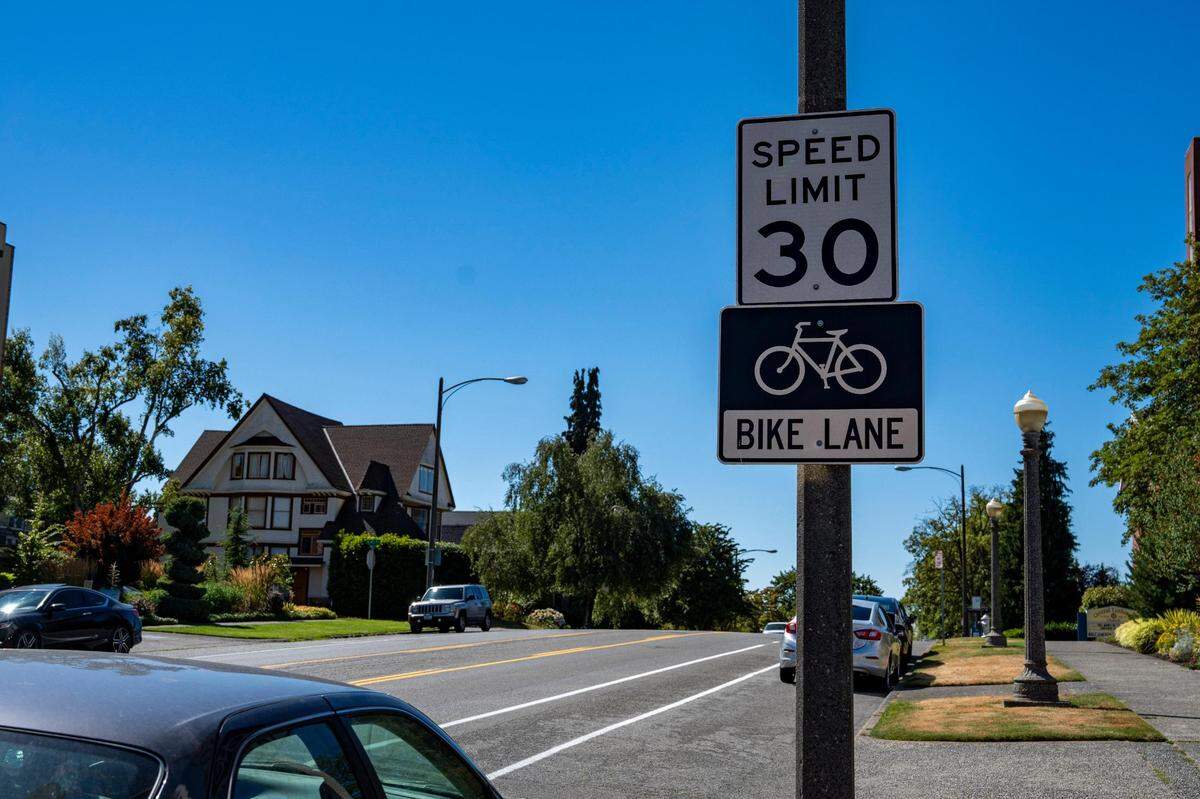
The speed limits on non-arterial, or residential streets, will be lowered to 20 mph, from 25 mph. The speed limits will be decreased in four neighborhood business districts, Old Town, 6th Avenue, Lincoln and McKinley Hill, from 30 mph to 25 mph. The change will go into effect Jan. 1.
The lowered speed limit is a part of the city’s commitment to Vision Zero, which sets a goal to eliminate traffic fatalities and serious injuries by 2035. The ordinance states, “People who are walking or biking are twice as likely to live after being hit by a car at 25 mph than 30 mph.” The city adopted the Vision Zero resolution in February 2020.
Carrie Wilhelme, the city’s senior transportation planner, said, in Tacoma, people who are hit walking or biking make up only 6 percent of crashes but 57 percent of fatalities and serious injuries. Lower speeds improve visibility, provide additional time for drivers to stop and reduce the potential for fatal or severe injuries by lowering impact forces, she said.
Mayor Victoria Woodards said at the council meeting the ordinance is about saving lives and it is a “no brainer of why we would want to do this in our community.”
Council member Joe Bushnell, District 5, spoke about the 13-year-old cyclist who was fatally struck on Pacific Avenue last month just outside his South Tacoma district.
“One death or one major injury is one too many in the city of Tacoma, and this is one step that we can take to meet those Vision Zero goals,” he said.
Wilhelme said other business districts might be candidates for future speed-limit reductions, pending construction completion or project development, such as the Stadium District. Proctor and South Tacoma neighborhood districts’ speed limits already are 25 mph.
The speed-limit changes for residential/business districts’ project will cost $220,000. The city was awarded additional grant funds from the Washington Traffic Safety Commission to expand the current driver safety campaign, “Show some love. Check your speed.”
The city will launch an education campaign about the lowered speed limits through a city-wide mailer, social media outreach, radio ads, TV public service announcements and working with driver education programs. The city will have a grace period between when the law goes into effect and when enforcement begins.
“Residential streets, our neighborhoods, should be safe and healthy places creating environments that are walkable, encourage social connection and foster a sense of community,” Wilhelme said. “Our neighborhood business districts are meant to provide services to the surrounding community and to be a place for neighbors to gather and to be walkable.”
Jenn Halverson-Kuehn, health promotion coordinator for Tacoma-Pierce County Health Department, said during public comment she supported the ordinance. She said cars are getting bigger and heavier and the speed they travel has never been so important to pedestrian safety.
“By reducing speed limits on non-arterials and in select business districts, you are giving drivers a chance to notice more of their surroundings and brake before it is too late,” Halverson-Kuehn said. “You are improving the level of service for everyone on the road, and you are taking steps toward creating a safe environment that will allow all road users to get to their destination alive.”
Laura Svancarek, advocacy manager with Downtown on the Go, also spoke in support of the lowered speed limits. She said reducing speed limits can make a significant difference in the survival rate when a pedestrian or cyclist is involved in a vehicle crash.
Wilhelme said Vision Zero aims to limit the need for traffic enforcement by designing and building a transportation system that calms traffic, changes driver behavior and supports the safety of people of all ages and abilities regardless of how they travel. The majority of fatalities and serious injuries takes place on arterial streets, which will be the next focus for Vision Zero efforts. Those streets might require infrastructure changes, she said.
Council member Kristina Walker, the former executive director of Downtown On the Go, said the ordinance is a first step and the city’s goal of eliminating traffic fatalities and serious injuries by 2035 is in sight.
This story was originally published August 4, 2022 at 11:14 AM.